

BLOG
How Hygienic Plate Heat Exchangers Help Prevent Cross-Contamination

In hygienic processing, product safety is just as important as production efficiency. Whether handling dairy products, beverages, sauces, pharmaceuticals, or cosmetics, one concern remains constant: preventing cross-contamination between the product and the heating or cooling media.
Plate Heat Exchangers (PHEs) are widely used because they provide efficient heat transfer while keeping different fluids separated. But how does this separation work?
Two Fluids, One Heat Transfer Process
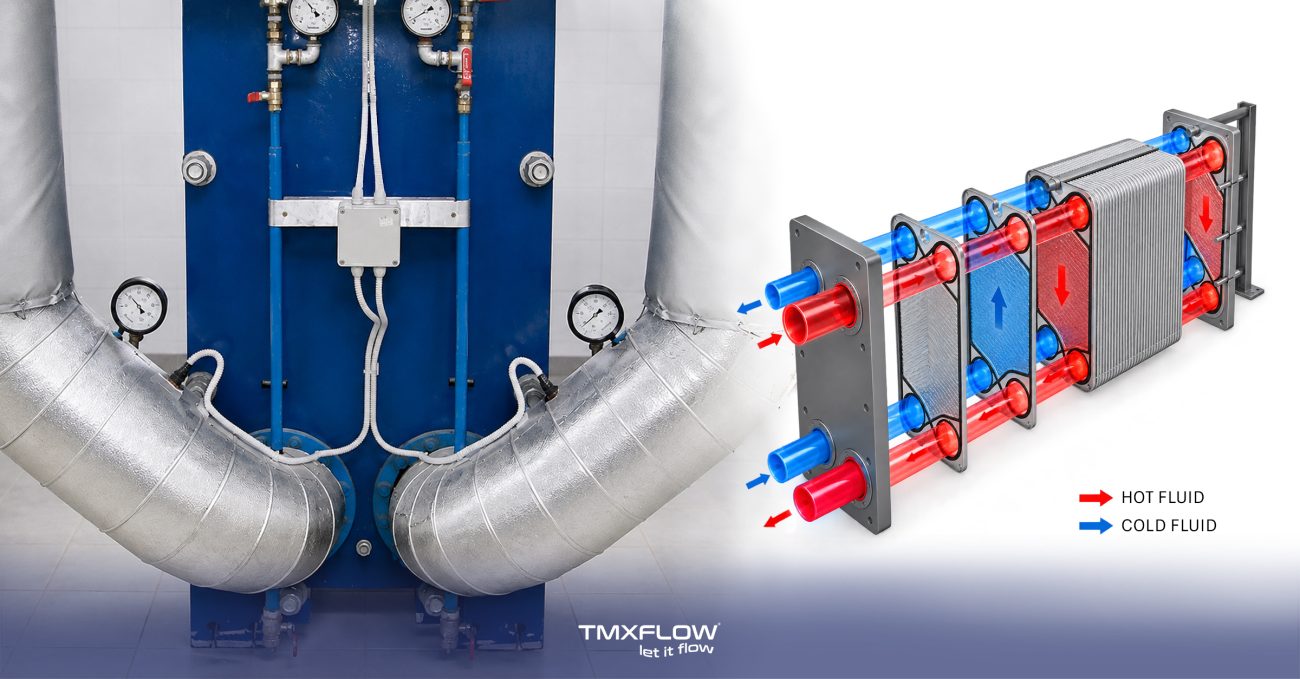
A plate heat exchanger is designed so that two fluids flow through alternating channels. One side carries the process product, while the other carries the heating or cooling medium, such as hot water, chilled water, or glycol.
The fluids do not come into direct contact. Instead, heat passes through the plates separating the channels, allowing the product to be heated or cooled while keeping the two circuits isolated.
The plates themselves can be manufactured from different materials depending on the application. Stainless steel is one of the most common choices in hygienic processing due to its corrosion resistance, durability, cleanability, and suitability for demanding sanitary environments. For other applications, materials such as titanium may be selected when specific chemical or corrosion-resistance requirements need to be considered.
The Importance of Reliable Sealing
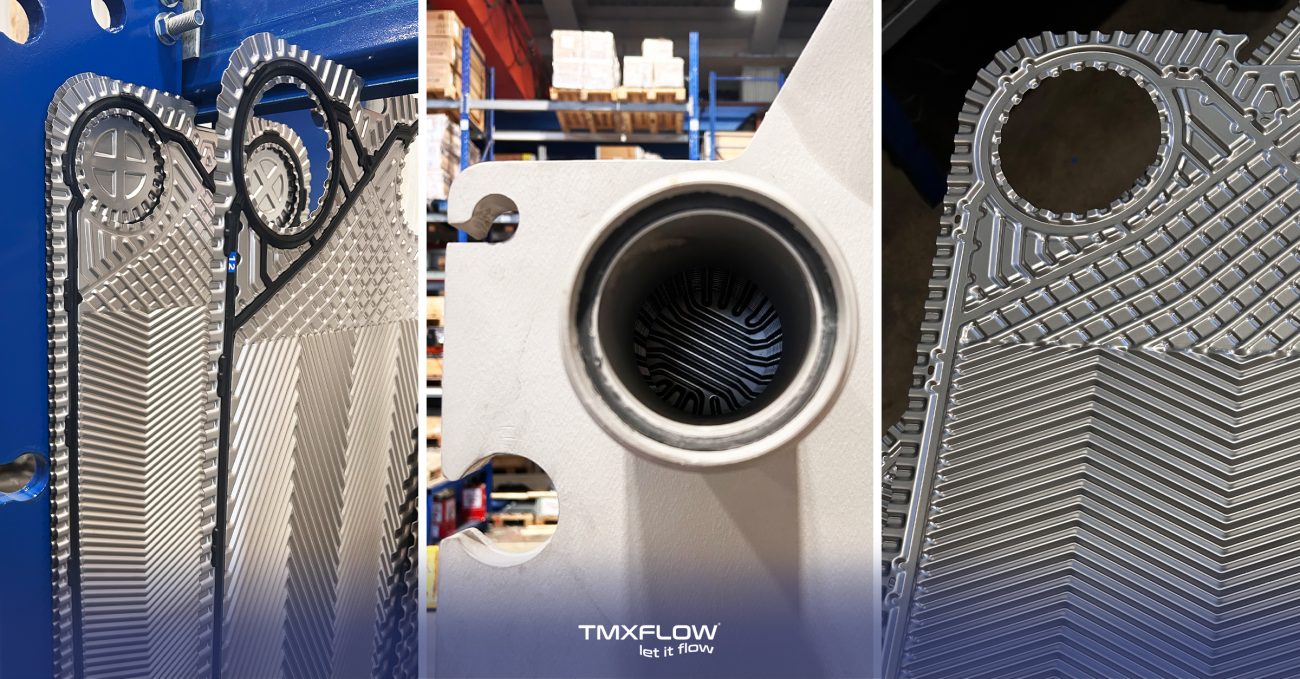
Keeping both circuits separated depends not only on the plates, but also on the sealing system.
In gasketed hygienic PHEs, specially designed gaskets create independent flow channels and help ensure that each fluid follows its intended path. Material compatibility, correct plate compression, and proper maintenance all contribute to reliable sealing throughout the equipment’s service life.
What Happens If a Leak Occurs?
A common misconception is that any gasket failure automatically causes the two fluids to mix.
Hygienic plate heat exchangers can be designed to make potential leakage externally visible before it results in unnoticed mixing between the circuits. This “leak-before-mix” approach helps operators identify a sealing problem early and take corrective action before product quality is affected.
As with any mechanical equipment, regular inspection and preventive maintenance remain important for maintaining reliable performance.
Why Hygienic Design Matters
Cross-contamination prevention is not achieved by a single component. It comes from the combination of:
- Appropriate plate material and design;
- Reliable gasket and sealing systems;
- Correct mechanical compression;
- Hygienic construction and suitable materials;
- Proper operating conditions and maintenance.
When these elements are considered together, a PHE can provide efficient and reliable thermal processing across a wide range of industries.
Choosing the Right PHE Is More Than an Efficiency Decision
Heat transfer capacity is only one part of selecting a plate heat exchanger. The materials, sealing system, hygienic design, operating conditions, and maintenance requirements should all be considered according to the specific process.
At TMXFLOW, we believe that selecting a hygienic PHE starts with understanding the application—not simply choosing a standard configuration.
Our approach is to consider the product, operating conditions, required hygiene level, materials, and process requirements to provide a solution that combines efficient heat transfer with reliable fluid separation.
Because in hygienic processing, performance is not only about transferring heat. It is also about protecting the process.