

BLOG
Why Is Surface Finish Important in Hygienic Equipment?

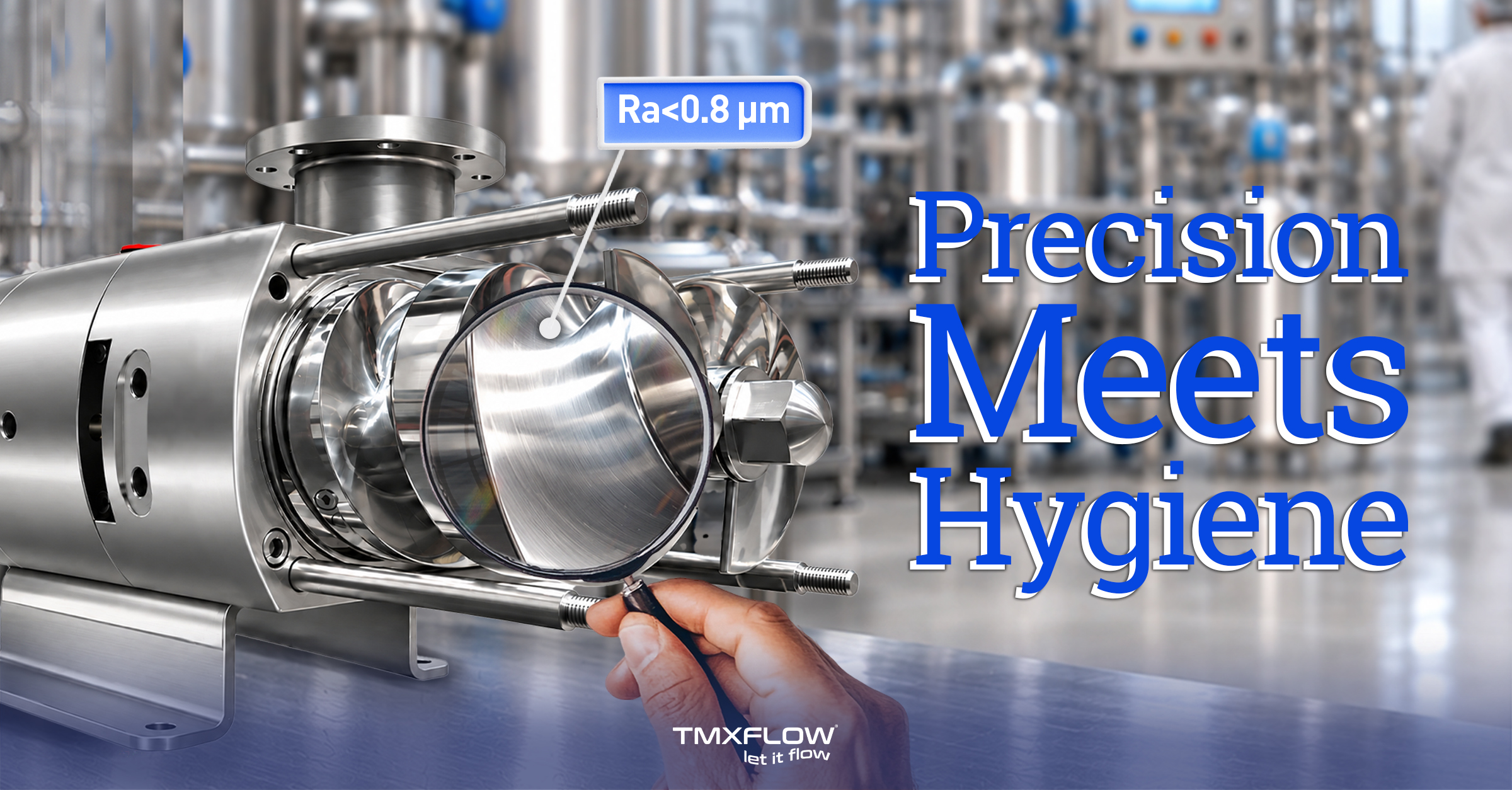
In hygienic industries, every surface that comes into contact with the product can have an impact on process safety and cleaning performance. For this reason, surface finish is an important part of hygienic equipment design, not simply an aesthetic characteristic.
A properly finished surface has fewer irregularities where product residues, microorganisms or contaminants can accumulate. This makes the equipment easier to clean and helps reduce the risk of contamination during production.
How does surface finish affect hygienic performance?
The roughness of a surface can influence how easily product residues adhere to it. A rough or poorly finished surface can create small imperfections that make cleaning more difficult, particularly when processing viscous, sticky or particulate products.
A smoother surface can help:
- Reduce product build-up and residue retention
- Improve cleaning and CIP performance
- Reduce potential areas for microbial contamination
- Facilitate inspection and maintenance
- Support consistent hygienic operation
This is particularly relevant in industries such as food and beverage, dairy, pharmaceutical and cosmetics, where equipment is frequently exposed to product and cleaning cycles.
Surface finish and material selection
Surface finish should also be considered together with the material used in the equipment. Stainless steel is widely used in hygienic applications because of its corrosion resistance, durability and suitability for food and sanitary processes.
However, choosing stainless steel alone does not guarantee hygienic performance. The material quality, surface roughness, welding, polishing and overall equipment design all contribute to the final result.
For example, a hygienic component may use a specified surface roughness such as Ra < 0.8 µm on product-contact surfaces. The appropriate specification depends on the application, industry requirements and applicable hygienic design standards.
More than a specification
Surface finish is one part of a larger hygienic design approach. Equipment must also be designed to minimize dead zones, facilitate drainage, avoid unnecessary product retention and allow effective cleaning.
For pumps and fluid handling equipment, these details become especially important because the equipment is continuously exposed to the product and often forms part of an automated cleaning process.
At TMXFLOW, surface finish is considered as part of the hygienic design of our fluid handling equipment, supporting applications where cleanability, product safety and process reliability are essential.
In hygienic processing, the quality of the surface is part of the quality of the process.