
CIP Systems
CIP Systems for great performance
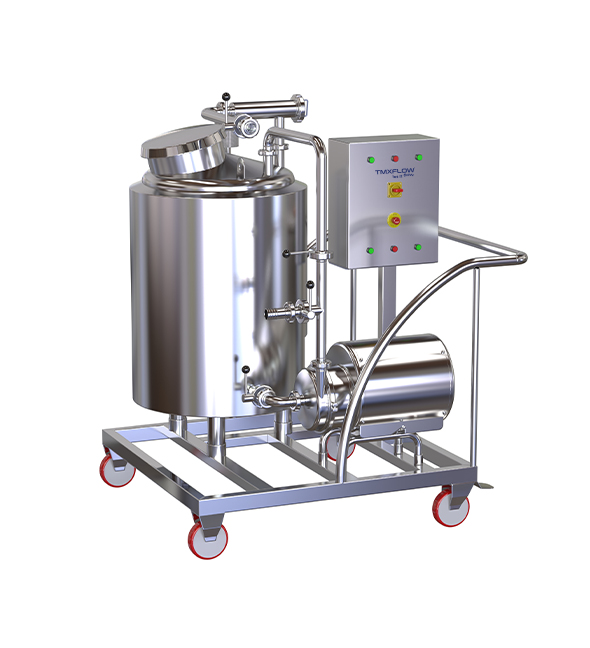
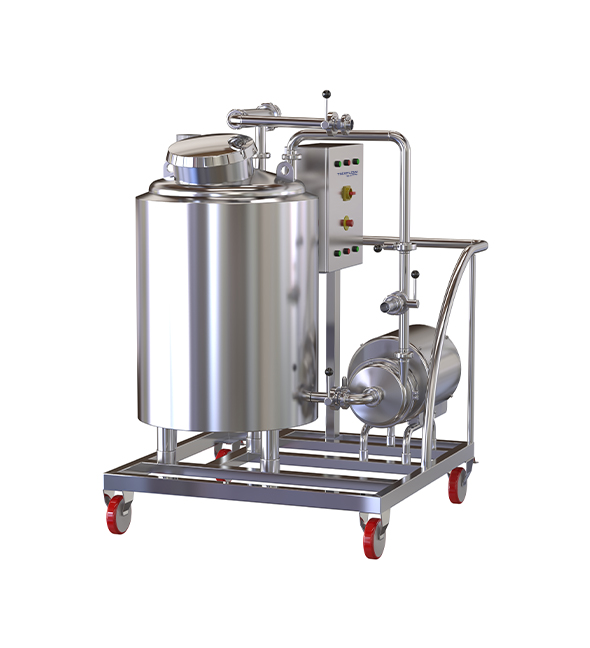
CIP Systems is a mobile cleaning system for sanitation and sterilization of containers and pipelines.
CIP Technology for Maximum Hygiene and Process Safety
CIP systems (Clean-in-Place systems) are advanced industrial cleaning solutions that enable the automatic cleaning and sanitization of tanks, pipelines, and process lines without dismantling production equipment. Widely used in processed food, beverage, dairy, pharmaceutical, and personal care manufacturing, these systems ensure the sustainable maintenance of hygiene standards.
Discover how Clean-in-Place (CIP Systems) can enhance the efficiency and reliability of your production line.
Design and Features
CIP Systems ensure controlled circulation of cleaning solutions through insulated stainless-steel tanks sized according to process requirements, integrated heating systems, and centrifugal pumps.
Operating temperatures can be adjusted between 0–80°C, and process parameters are monitored via a digital control panel.
- Cleaning flow rate: approximately 10,000 L/h
- Operating pressure: approximately 3 bar
- Product-contact surfaces: AISI 316L stainless steel, compliant with hygienic standards.
The system can be configured with optional equipment such as chemical dosing pumps, conductivity measurement systems, water recovery modules, spray balls, or additional tanks.
Thanks to its modular design, it allows easy integration into different production lines while delivering efficient cleaning performance.
What Is a CIP System?
CIP systems provide consistent and verifiable cleaning performance by precisely controlling critical parameters such as temperature, conductivity, turbidity, TOC, pressure, flow rate, and time.
They play a strategic role in maintaining hygiene standards, preventing cross-contamination, ensuring production continuity, and securely recording and reporting process data in compliance with GAMP-5 standards—particularly in the food, beverage, pharmaceutical, cosmetic, and chemical industries.
Key Advantages of Clean-in-Place (CIP) Systems
Industrial CIP solutions combine hygienic design, energy efficiency, and intelligent automation infrastructure to deliver safe, efficient, and uninterrupted cleaning in production lines.
For modern facilities, CIP systems are not merely cleaning equipment but an essential component of quality assurance and operational excellence. Used in food, beverage, dairy, pharmaceutical, biotechnology, and cosmetic industries, CIP systems maintain production continuity while delivering validated and repeatable cleaning performance.
How Does a CIP System Work?
A safety valve automatically opens when system pressure exceeds the predetermined set value.
- Pressure increases and balances the spring force.
- When the set pressure is exceeded, the valve disc opens.
- Excess pressure is discharged in a controlled manner.
- When pressure drops to a safe level, the valve closes again.
This automatic cycle protects equipment against sudden pressure increases and continuously maintains system balance.
Industries Using CIP Systems
CIP (Clean-in-Place) systems are widely used in industries where hygiene is critical and process equipment requires regular cleaning.
Main Application Areas